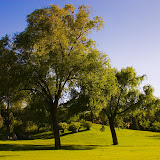
梦幻般的天空
今天的天气实在是太完美了。少见的风和日丽,难得的漂亮的北京的春天。
漂亮的蓝天白云真的只能用梦幻般来形容。
虽然还有很多工作要做,不能拿起单反相机去记录下这幻境。我还是顺便用手机拍摄了一些照片,也算是各慰藉吧。


今天的天气实在是太完美了。少见的风和日丽,难得的漂亮的北京的春天。

这次,破天荒的在家待了很多天,也借机会读了不少的书。在这里分享一下:
伟大的博弈 华尔街金融帝国的崛起 [美]约翰·戈登 中信出版社
介绍华尔街的发展历史。因为我不是学经济金融的,所以似乎并不能从这本书中学到太多知识。但这本书以历史的笔法描述了一个引人入胜的华尔街传奇故事,以华尔街为缩影看到了美国的金融历史,对于一个外行来说也是不错的一本书。想了解华尔街历史,美国金融历史的朋友可不能错过这本书。
Freakonomics 魔鬼经济学 [美]斯蒂芬·列维特 广东经济出版社
这本书其实称不上是经济学,但其绝妙的思路绝对值的每一个人一看。对于任何一个喜欢研究问题的人,这本书对于你的研究思路都会有帮助,无论你是做任何方面的研究。纵使你不了解经济学,或者根本对研究问题没有兴趣,你也可以把这本书作为一本侦探小说来读,其思路之新颖,内容引人入胜,绝不亚于一本侦探小说。
我也是一口气把这本书看完的,内容不多,但绝对够精彩。
君主论 马基雅维利
看这本书颇为“上当受骗”,虽然马氏著作以这本君主论为最著名,但这献谄之作由于意图问题,显得有点“先天发育不良”,于是乎,要是想全面理解马氏理论,必然再读《论李维》。当然,我是没有兴趣再读了。
如题所言,本书主要阐述了君主制国家中君主如何治理国家的一些问题和“实用”方法。而对于民主国家则并没有涉及,将在《论李维》中再行论述。
作为国家政治里程碑式的著作,关心国家政治的人不容错过。
人像摄影手册 [美]比尔·赫特尔
这本书写的很不错,内容很实用,能学到很多有用的知识。
摄影师的视觉感受 [美]莱斯利·施特勒贝尔
像所有讲艺术理论的书一样,看起来基本上都“太过理论”。像能实际领悟些什么还是需要实践中去理解了。总之,我看这类书的时候一般都没什么心得和收获,看来我根性太差,可悲可悲 恩
小白阿小白!你怎么能这么贵呢…..
http://www.photo.net/equipment/canon/70-200
You cannot be a professional photographer without a high-quality, high-speed telephoto zoom lens. Within the Canon EOS system, three such lenses are available:
All of these provide very high image quality. All have ultrasonic motors and allow for full-time manual focus. This article is intended to help you decide among these three lenses.


Ben, one of my 18 y.o. students from MIT the preceding semester, had to leave New York that week and, his going-away present was to come along as an assistant on this job. [I think he was satisfied; as we waded through the sea of 14-17 y.o. flesh at the juniors swimsuit competition, I had to repeatedly hoist his tongue back into his mouth.]
Every now and then we’d find a really beautiful contestant and drag her outside for better light. This usually attracted a crowd. At one point, I decided to change the 70-200/2.8L for a 50 macro. I started to unmount the 70-200 and then realized the camera bag wasn’t open. In the back of my mind, I didn’t trust Ben to do anything so I moved my hands to open the camera bag. The month-old 70-200/2.8L (non-stabilized) dropped from waist height (1 meter) onto concrete with a horrifying “thunk”.
No damage. [Of course, the gods punished me for writing the above. In October 1997, I was in Northeast California and the lens became hard to focus manually (but was fine in AF mode). A couple of days later, I noticed that the front and back halves of the lens were no longer securely connected. It went to Canon for a $100 worth of service and I’m still using the lens in 2001.]


Above images were taken with continuous AF, EOS-5 body set to choose by itself among the 5 AF sensors. Non-stabilized 70-200/2.8L. Fuji Super G + 400 neg film..
You turn a ring to zoom this lens. If you have the lens on a tripod pointing down a bit, that means that the focal length doesn’t creep as it would with a push-pull zoom. Much nicer. The Canons also come with a removable tripod collar. The bayonet plastic lens hoods work well also.


Our first tests of the 70-200/2.8L IS lens were very encouraging. Here are some images taken with a Canon D30 body, standing up, with the zoom set to 200mm, of a building in New York City:
| unstabilized | stabilized | |
|---|---|---|
| 1/15th |  |  |
| 1/30th |  |  |
| 1/60th |  |  |
Here are some images taken while sitting down of a flower, also at 200mm:
| 1/15th | 1/30th | 1/60th |
|---|---|---|
 |  |  |
The bottom line seems to be that acceptable results are obtainable at 1/30th of a second. That’s 3 f-stops better than you’d expect from the “1/focal-length” rule of thumb.
If you’re going backpacking with a tripod, save your back and get the 70-200/4L. For studio portraits that will be lit by electronic flash, get the 70-200/2.8L (non-stabilized). For all-around high-performance, you definitely want the IS version of the 70-200/2.8L.
Only if you’re on an extremely tight budget should you consider the anicent Canon EOS 80-200/2.8L lens. This lens does not allow for full-time manufaul focusing. Also, the old lens design also is incompatible with teleconverters.
I like using the 70-200 on a tripod to isolate patterns in landscapes. I’ll have the lens stopped down to at least f/11 for wide depth of field but I still appreciate the f/2.8 maximum aperture because it keeps the viewfinder bright and makes it easy to focus manually.
Here are some snapshots from my excursions to foliage country…