Google
 
Showing posts with label Research. Show all posts

Sunday, June 10, 2007

Write Paper和Do Research的区别

路上和Dai Qiang聊天的时候说起, 其实一篇Paper写出来的顺序,和实际进行研究时候的顺序往往是不同的。一个Idea往往很吸引我们,Paper很可能写的很引人入胜,但实际上很多时候的研究顺序确是反的,首先,先有一些现有的方法,先有一些实现上的东西,而后才有的KeyIdea,而后才有的整个论文的写作思路。
所以,看paper还是要认真,体会其中的精要所在.............

Friday, June 08, 2007

读Paper要认真

最近在做Texture Synthesis,本来在之前的时候还自以为是的读了几篇Texture Synthesis的Paper,写过一个Survey。结果,真正自己做起来,才发现有些东西并没有理解。而且,在那次做Survey时候读过的一篇论文中[Ashikhmin2001]提到的 coherent synthesis居然没有真正理解(这本来是该篇论文的主要贡献之一)。所以,结论是看paper不认真,只是大概了解了其idea,并没有真正的想明白其中的奥妙。
其实,类似的例子还是有的,比如Sun Jian 的 Lazy Snapping 还有 Image Completion with Structure Propagation 都有很深的数学内涵,自己第一次看的时候都没能体会。看来今后读paper还是要认真。

Friday, April 06, 2007

数与诗的后现代对话——前国立清华大学校长刘炯朗教授在微软亚洲研究院的演讲


Harry 强烈推荐的Speech
照片大部分是我照的哦 呵呵~ 虽然照的不算好....
左边照片为演讲前作介绍时嘉宾席
从左至右分别是
Harry Shum : Managing Director of MSRA
刘炯朗 : 前国立清华大学校长
Wei-Ying Ma : Manager of WSM Group MSRA
Xiaoou Tang : Manager of VC Gruop MSRA
下面是Speech的一个摘要记录,以下摘要全文转载自
数与诗的后现代对话 ——前国立清华大学校长刘炯朗教授在微软亚洲研究院的演讲

你曾经在数学里品读出诗歌的意蕴么? 你曾经在诗歌中解读出数字的神秘么? 一个是科学王国的宝剑,一个是文学殿堂的瑰宝;一个张扬着理性的威严,一个释放着感性的激情。面对如此遥不可及的数与诗,你的确很难想象这两者之间的联系。前国立清华大学校长刘炯朗教授在前不久举行的“科技与人文”演讲系列中,趣味迭生地为我们揭开了“数里有诗,诗里有数”的奥秘。

数里有诗:诗歌是感性的数学
刘炯朗教授虽然满头银丝,但是跟年轻人一样,仍然对事物充满着新鲜的好奇,也正是源于这种对真妙的向往,让刘教授看出了数学背后的诗意。一开始,他用生活化的例子切入数学概念,在开场时就提出一个有趣问题:32块2*1大小的骨牌填充一块8*8格面积的棋盘,会有多少种可能?这就连古希腊数学家阿基米德也碰到类似疑惑——为14个不规则形状的图案寻找排出一个正方形的几种可能而大伤脑筋。

离散数学中的“列举”理论在刘炯朗教授的思维中竟然和古典诗词摩擦出火花。你曾经读过康熙的《一字诗》么?“一蓑一笠一扁舟,一丈竿头一只钩,一水一拍似一唱,一翁独钓一江秋”;你还曾读过徐志摩的《沪杭车中》么?“一卷烟,一片山,几点云影;一道水,一条桥,一支橹声;一林松,一丛竹,红叶纷纷 ”。这些诗人为我们“一一”点数出美好景致中的种种事物,这种细致的罗列与数学中的“列举”有了异曲同工之妙。

“落花人独立,微雨燕双飞”,刘教授饶有兴致地给我们吟起了唐代诗人翁宏的诗句,它充分体现了中国古典诗词的美:形式整饬且音韵和谐。对联句,更是一种体现对仗工整,平仄协调的独特艺术形式。对联的特点是既要有“对”,又要有“联”。形式上成双成对,彼此相“对”;上下文的内容相互照应,紧密联系。而大家耳熟能详的“对称”则是数学矩阵、等量等公理中的重要概念。点、线、面之间的对称组合,就如同平仄、词性、词义之间的对仗关系,丝丝入扣。接着,刘教授信手拈来另一个对联“上海自来水来自海上,中山归隐客隐归山中”,一下子把数学中的“对称”格式和诗歌中的“对仗”手法活灵活现地“对”起来了。
“如果你把“上海自来水来自海上,中山归隐客隐归山中”这上下联各自倒转回来念,会是怎样一个句子呢?”刘教授引导着场下的观众玩起了文字魔术。结果,当观众一个字一个字念过去的时候,发现自己竟被刘教授给“耍”了。上下联,不论是顺着念,还是逆着读,都依然是一模一样的那个句子。原来刘教授将“对称”法严格运用在了诗句的组织中,结果形成了语言艺术上的“回文”效果,这种回文修辞在英文中也常有发生,比如,”Able was I ere I saw Elba”等等。

从第一排骨牌的倒下,我们知道了其余多米诺骨牌的结局——那就是全部倒下。从“一叶知一秋”“一树一菩提”这些富有深意的诤言,我们知道了微小事物对大事件的通感和预知。数学上的感应,与诗歌中的感应,都让我们领略到了微观对宏观的折射力量。就像18世纪英国诗人威廉·布莱克在一首诗中所揭示的真理:”To see a world in a grain of sand, and a heaven in a wild flower, hold infinity in the palm of your hand, and eternity in an hour.” 这首诗的中文翻译或许很多人都熟悉:一花一世界,一沙一天国,君掌盛无边,刹那含永劫。刘教授在对这首诗境彻悟和感应的基础上,给出了自己的独到诠释:一沙窥尘世,一瓣证瑶台,双手持无量,刹那悟如来。

接着,刘教授又为观众演绎了数学中的递回公式与诗词“顶真格”的姻缘联系。递回公式中,序列的每一项被定义为前一项的函数,每相邻两项之间会存在重叠关系,如关系式dn=(n-1)dn-1+(n-1)dn-2. 这种上递下接的艺术特色在“顶真格”修辞中发挥得淋漓尽致。无论是白居易《长恨歌》中的“后宫佳丽三千人,三千宠爱在一身”,还是脍炙人口的“柳色青,柳色青青春满城,满城风雨烟光送,风雨烟光送远行,远行君向归山路……”,这些相似的美感诉求,让我们不由得感叹头尾蝉联的“顶真”句式原来与递回公式中的形式美是同此相通。

诗里有数: 数学是理性的诗歌
“这次第,怎一个愁字了得”,李清照的这句经典名句,虽然哀婉幽怨,但是却激发了刘教授无穷的灵感,他想帮助女诗人解答出“愁”字到底值几许?刘教授引诗据典,给观众吟起来许多有关“愁”的诗句。“只恐双溪舴艋舟,载不动许多愁”——“愁”能载舟;“一斛明珠万斛愁,关山漂泊腰肢细”——“愁”能斛量;“与尔同消万古愁”——“愁”能亘古。刘炯朗教授用“列举”法证明了“愁”的份量完全可以用时间和空间来衡量。于是,折回到李清照的《声声慢》那“愁”字感发的源头——“梧桐更兼细雨,到黄昏,点点滴滴”——这愁绪的来处也能看得清清楚楚。刘教授在此灵机一动,因这了不得的“愁”字引申出了一个数学结论:2>1. 再看这首词的开头,“寻寻觅觅,冷冷清清,凄凄惨惨戚戚”,反复齐整的叠字运用,让人深切地感受到了其愁愫的深重,那份量远远超越于一个“愁”字。于是,从这一点上不难看出, 2>1的数学结论也同样成立。
刘教授玩味了李清照的词之后,仍然意犹未尽,于是继续挑起了辛弃疾的词玩起来了更有趣的文字游戏。《丑奴儿》有一句经典诗句“而今识尽愁滋味,欲说还休,欲说害羞,却道天凉好个秋”。从偏旁结构而言,“秋”与“愁”这两字,前者正好是后者的一半。同时,结合诗义而言,就很自然地得出了1/2<1的结论。如此发散的思维和绝妙的联想,也只有像刘炯朗教授这样学识渊博的通达之人才能加以融会贯通了。>
数与诗的对话
数学:我的任务就是在普遍结果与特殊问题之间,在一个概念和另一个看似毫无关联但是却有联系的概念之间“拉关系”。
诗歌:我的目的就是把月与花、春与秋这些实质的景物,和喜与悲、爱与恨、有序与无序等情绪心态之间“拉关系”,并编织成优美动人的诗篇。
刘教授在整场演讲中虽然运用了看似“无中生有”的方法,但是却向我们妙趣横生地揭示了数学与诗歌在“拉关系”中的美感。其实归根究底,数学家和诗人的追求是一样的,都是为了美,并将不相关的事物联系起来并使之和谐。著名数学家丘成桐曾经说过:“数学是一门很有意义、很重要的科学,它除了有应用性的方面,还有文学性的方面。文学的最高境界,是美的境界。而数学具有着诗歌的内在气质,达到一定境界后,我们也能体会和享受到数学之美。”
无论是形象思维,还是逻辑思维;无论是诗人眼中,还是数学家眼中,他们所关照的客观世界都是美好的,人类的精神世界也是美好的。美是数学与诗歌的共同标准,也是这场数与诗的对话中最高亢的音符。

Monday, April 02, 2007

Paper被搞了

4月1日 SIGGRAPH出结果了
偶们的项目非常不幸地,在这场硝烟弥漫的战争中光荣的成为分母。
不过,正如Harry大人说的,经历这个过程能够真正的体会一个High quality research project的方方面面,能学到的东西远远不是Paper中不中的问题了。
以这样一个项目作为开端,相信今后一定会做出更细致更好的研究吧

Wednesday, February 28, 2007

Larry Page on AI

from http://battellemedia.com/


You know I trend toward the mystic when it comes to the emergence of AI, and in the book I explored the idea of Google using brute computation and comprehensiveness to allow AI to emerge in its network. Here (Cnet video) Larry Page discusses this very idea, ending with "it's not as far off as many people think." Thanks KK.


Tuesday, December 19, 2006

期末袭来

虽然没有专业课的考试,不过一门接着一门的大作业绝对够受的.....SIGGRAPH项目也进入1个月的冲刺期,根本是忙的一塌糊涂。
按部就班,一点一点的慢慢搞定吧,恩 加油。

Timon的Paper中了SIG CHI 恭喜一下恭喜一下 很牛啊 景仰~~

顺便推荐个Blog
http://shuangz.spaces.live.com/
就是坐在我旁边帅哥的Blog

恩 本来一直想做牛人的Link的 那就从这位大牛开始吧
这人日语很牛,可以查字典玩日文Galgame的 景仰
这人编程很牛,ACM/ICPC年度总冠军
这人 将来一定特别牛 一年之后就到全美Top 10读计算机了吧 赫赫 加油 加油

Bless 我们一起做的SIGGRAPH Project顺利 ....en

Wednesday, November 29, 2006

Shree K. Nayar


Shree K. Nayar
T.C. Chang Professor
Computer Science Department
Columbia University


Shree K. Nayar is the T. C. Chang Chaired Professor in the Department of Computer Science at Columbia University. He received his Phd degree in Electrical and Computer Engineering from the Robotics Institute at Carnegie Mellon University. At Columbia, he is co-director of the Columbia Vision and Graphics Center and heads the Computer Vision Laboratory (CAVE), which is dedicated to the development of advanced computer vision systems. His research is focused on three broad areas, namely, the creation of novel vision sensors, the design of physics based models for vision, and the development of algorithms for scene interpretation. The work conducted by his research team is motivated by applications in the fields of digital imaging, computer graphics, human-machine interfaces and robotics.

Monday, October 30, 2006

Raj Reddy


http://www.rr.cs.cmu.edu/rrlong.html
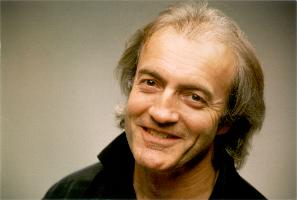
Raj Reddy

Wean Hall 5325, School of Computer Science, Carnegie Mellon University

Pittsburgh PA 15213-3891412-268-2597 412-683-5348 (Fax)


For additional details see www.rr.cs.cmu.edu/rrlong.html


Dr. Raj Reddy is the Mozah Bint Nasser University Professor of Computer Science and Robotics in the School of Computer Science at Carnegie Mellon University. He began his academic career as an Assistant Professor at Stanford in 1966. He has been a member of the Carnegie Mellon faculty since 1969. He served as the founding Director of the Robotics Institute from 1979 to 1991 and the Dean of School of Computer Science from 1991 to 1999.


Dr. Reddy's research interests include the study of human-computer interaction and artificial intelligence. His current research interests include Million Book Digital Library Project; a Multifunction Information Appliance that can be used by the uneducated; Fiber To The Village Project; Mobile Autonomous Robots; and Learning by Doing.


He is a member of the National Academy of Engineering and the American Academy of Arts and Sciences. He was president of the American Association for Artificial Intelligence from 1987 to 89. Dr. Reddy was awarded the Legion of Honor by President Mitterand of France in 1984. He was awarded the ACM Turing Award in 1994, the Okawa Prize in 2004, the Honda Prize in 2005, and the Vannevar Bush Award in 2006. He served as co-chair of the President's Information Technology Advisory Committee (PITAC) from 1999 to 2001 under Presidents Clinton and Bush.

Thursday, October 26, 2006


Bio

Bill Buxton is a Principal Researcher at Microsoft Research. Prior to joining Microsoft he was Principal of the Toronto-based design and consulting firm, Buxton Design. Bill is one of the pioneers in computer music and HCI. He has played an important role in the development of computer-based tools for music, film, industrial design, graphics and animation. As a researcher, he has had a long history with Xerox’ Palo Alto Research Center and the University of Toronto, where he is still an Associate Professor in the Department of Computer Science. He has also been a lecturer in the Department of Industrial Design at the Ontario College of Art and Design. From 1994 until December 2002, he was Chief Scientist of AliasWavefront (where he shared in an Academy Award for Technical and Scientific Excellence), and from 1995, its parent company SGI Inc. In 2001, the Hollywood Reporter named him one of the 10 most influential innovators in Hollywood. In 2002 Time Magazine named him one of the top 5 designers in Canada, and he was elected to the ACM’s CHI Academy. More information on Buxton and his work can be found at: http://www.billbuxton.com/

Wednesday, October 25, 2006

Computing in the 21st Century : Research 2.0

By
Harry SHUM
Managing Director, Microsoft Research Asia
Distinguished Engineer, Microsoft Corporation
http://research.microsoft.com/users/hshum/

Audio Record
http://www.box.net/public/n6hcec7d2u#main
Tuesday, October 24, 2006

Computing in the 21st Century


Rick RASHID

Senior Vice President, Microsoft Research
Microsoft Corporation

Presentation title
Microsoft Research: Turning ideas into reality for 15 years
Abstract
This year Microsoft Research celebrates its 15th anniversary. In this talk I will describe how Microsoft Research came into existence and the decisions, events, and factors that I believe have led to its success. I will talk about the role of basic research in industry and how it relates to both academic research and product development, and I will look forward to the future and the technologies that will shape the next 15 years.

Andrew Chi-Chih YAO
Professor, Center for Advanced Study
Tsinghua University
2000 Turing Award recipient

Presentation title
A Modern Theory of Trust-but-Verify
Abstract
The development of the Internet has not only changed the world technologically, but has also given rise to novel and exciting scientific inquiries. For example, the quest of finding trust and security in a networked environment necessitates the re-examination of what reliable knowledge is, and how it can be transferred from one party to another. In this talk we will discuss a modern theory of proofs that has been developed in recent years by theoretical computer scientists. Some of the stunning insights obtained may be compared with the most intriguing ones ever found in mathematics, and they are starting to be used in applications such as the secure verification of software downloads.

Eric GRIMSON
Department Head, Electrical Engineering and Computer Science
Bernard Gordon Professor, AI Vision Group
Massachusetts Institute of Technology
Presentation title
Computational applications in medicine
Abstract
A rapidly growing number of researchers are applying cutting-edge computer science methods, from machine learning, computer vision, computer graphics, robotics, communications, networks, and system design, to challenging problems in medicine. Examples include image-guided surgical systems, surgical robots, monitoring systems to prevent seizures or track physiological changes, systems that detect disease related differences between populations, and diagnosis systems. Because these systems are used in real medical settings, software robustness and reliability are special concerns. This talk will survey some example systems, showing the role of algorithm development and software design in these novel methods.


Jim GRAY
Technical Fellow, Microsoft Research Silicon Valley
Microsoft Corporation
1998 Turing Award recipient
Presentation title
eScience - A Transformed Scientific Method
Abstract
Jim has been working for the last decade to get all scientific data and literature online and cross-indexed. Progress has been astonishing, but the real changes will happen in the next decade. First, funding agencies are forcing peer-reviewed science literature into the public domain and peer-reviewed science literature is being maintained in new ways -- cross-indexed to the data that produced it. Scientific data have traditionally been hoarded by investigators (with notable exceptions). The forced electronic publication of scientific literature and data poses some deep technical questions, including just exactly how to read and understand it? How can we preserve it so that it will be readable in a century? Incidental to this, each intellectual discipline X is building an X-informatics and computational-X branch. It is those branches in collaboration with Computer Science that are faced with solving these issues. Jim has been pursuing these questions in Geography, Astronomy, and more recently in Bioinformatics.

Harry SHUM
Managing Director, Microsoft Research Asia
Distinguished Engineer, Microsoft Corporation
Research 2.0
Abstract
Two important technical trends have emerged over the last decade. First, the Web continues to grow its size with a variety of new data and penetrates every aspect of our lives. Second, "software as services" has become not only a new form of software delivery, but also a way of releasing quality software. These two trends are having sweeping influence on the software ecosystem and IT industry by driving many online businesses that connect people to people and people to information. In this talk, we examine the potential impacts of "Web" and "software as services" on "research." We share our findings with the audience by suggesting six potential new directions for "Research 2.0": (1) The Web as a research platform; (2) leveraging community effects; (3) data centric computing; (4) the need of deployment driven research; (5) infrastructure is crucial; and, (6) the variation of multi-disciplinary research. To illustrate these important directions of Research 2.0, we will describe and demonstrate some recent progress made at Microsoft Research Asia in each of these areas.

Niklaus WIRTH
Professor Emeritus, Computer Science
Swiss Federal Institute of Technology
1984 Turing Award recipient
Presentation title
A Brief History of Software Engineering
Abstract
We present a personal perspective on the Art of Programming, starting with its state around 1960 and following its development to the present. The term Software Engineering became known after a conference in 1968, when the difficulties and pitfalls of designing complex systems were frankly discussed. A search for solutions began, concentrated on better methodologies and tools. The most prominent were programming languages that reflected the procedural, modular, and finally, object-oriented styles. Software engineering is intimately tied to their emergence and improvement. Also of significance were efforts of systematizing, even automating, program documentation and testing. Ultimately, analytic verification and correctness proofs were to replace testing.More recently, the rapid growth of computing power has made it possible to apply computing to evermore complicated tasks. This trend dramatically increased the demands on software engineers. Programs and systems became complex and almost impossible to fully understand. However, the sinking cost and the abundance of computing resources inevitably reduced care for good design. Quality seemed too extravagant, and has become a loser in the race for profit. We should be concerned about the resulting deterioration in quality. Our limitations are no longer given by slow hardware, but by our own intellectual capability. Programming, after all, is NOT easy. From experience we know that most programs could be significantly improved, made more reliable, economical, comfortable to use. What can we do?
Pat HANRAHAN
Canon USA Professor, Computer Science
Stanford University
Presentation title
The Big Idea in Computer Graphics
Abstract
What is the most important idea in computer graphics? I propose it is the simple idea of a procedural representation of an image. This is in contrast to traditional physical representations of images using paints, inks, pigments, fresco, etc. Representing images procedurally allows us to create elaborate physical simulations of virtual worlds which has revolutionized movie-making.More important, it allows us to create representations of abstract concepts. Making abstract ideas concrete by making a picture is one of the joys of computing. In the future, I believe abstract image representations will be the major focus of computer graphics research and development.Finally, it allows us to use the computer to build powerful new types of graphics tools, systems and hardware, which, in this age of computer-mediated communication, have become an essential part of personal computer systems.
Ed LAZOWSKA
Bill and Melinda Gates Chair, Computer Science and Engineering
University of Washington
Presentation title
Computer Science: Past, Present, and Future
Abstract
The next 10 years of advances in computer science will be far more significant and far more interesting than the past decade. Ed will review the progress in the field, and present a number of "grand challenge" problems that computer scientists should be prepared to tackle in the decade ahead.

Monday, October 23, 2006

21st Computing conference

http://research.microsoft.com/asia/21stcomputing/2006/index.htm

第八届“二十一世纪的计算”大型学术研讨会将于10月24日(星期二)在北京举行。今年的会议由国家自然科学基金委员会、微软亚洲研究院(Microsoft Research Asia)、清华大学联合举办,主题为“‘质’取计算未来”。目前在全球,计算已经由人类活动的一个重要因素转化为核心要素,可靠的、可预计的以及可以安全运行的计算机系统和服务受到广泛欢迎,而日益增强的功能性和复杂性也使保证安全运行成为一种挑战。
同往年一样,本次大会的演讲人由世界知名学者、计算方面专家等大师组成,包括了图灵奖得主、美国国家科学院、美国国家工程院院士等。这些学术专家和业内领袖将在他们的主题演讲中同大家分享他们在软件核心运算方面的想法和愿景。
微软亚洲研究院成立之初就在1999年举办了第一届“二十一世纪的计算”学术研讨会。该会议实现了微软亚洲研究院为中国计算机科研学者同国际同仁之间建立学术交流与合作平台的期望。通过举办“二十一世纪的计算”,我们为大中华区科研人才在计算机科学方面与国际最新技术和潮流的接轨创造了独一无二的机会。

Tuesday, September 19, 2006

[Talk notes] Li Gong : Internet Past and Future


Talk notes
Li Gong : Internet Past and Future


宫力博士
微软公司MSN互联网技术部中国区总经理兼微软中国研发集团副总裁, 清华大学信息研究院顾问委员会委员,客座教授

Internet is still in revolutionary
Internet并非一直如此,在不断发展,而且还在发展

研究一门学科 也要研究他的历史
研究Context的渊源

Classical Paper Ref
Notiable Computer Network / Communication of ACM
Survey on Computer Network when Internet is just forming

End-to-End Arguments in System Design / ACM Transaction on Computer System 1984
解偶,独立性(思考IBR的解偶)
Example
火车机车/火车铁轨 分别运营 相互独立

Rethinking the Design of the Internet End-to-End Argument vs. Brave New World
ACM Transaction on Internet Technology 2001

现有Internet面临的问题
DNS Problem: Security
Routing Problem
IP address shortage
IPv6 hard to combine

End-to-End Broken
Untruth worthy end points
Third party involvement: esp. Government, ISP
Result, Unfaithful connection and delivery

The IP QoS Breakthrough


Everything is connected
Things That Think in MIT

Name card phenomenal / Think about Phone Network or Social Network

JXTA by Gong

In time, some new network may appear. Perhaps as an overlay on the Internet, which attempt to reintroduce a context for unfettered innovation, The Internet will like the telephone network system before to become a infrastructure of this new kind of network.

In Addition
2001
Economics and The Design of Open System

Sunday, September 17, 2006

Research Comment

It is always a good idea to try to write down your idea. Writing helps you to formulate your thoughts clearly.