Google
 

Thursday, September 14, 2006

Lilith手办


After seen the anime ‘Yami to Boshi to Hon no Tabibito’, I found that I was infatuated with one character here, that is lilith.

Then I tried to find a model figure of this pretty cute girl. First Excalibur and I searched the whole ‘GuLou Street’, where is a famous Japanese anime related product selling center in Beijing, but we didn’t find any thing related ‘Yami to Boshi’. Then I search the ‘Taobao.com’ also no any useful information. After search the whole internet, I just found 1/7 PCV uncolored model, or this one below.

This can only purchase from Japan…

http://www.chara-ani.com/pickup.asp?html=ind

ex.html&path=yamibou


商品仕様:塗装済み完成品
ヴィネットフィギュア

サイズ:幅100*高120*奥行80(mm)

素材:PVC

原型師:みすまる☆ましい

発売予定日:2004年7月24日

価格:3,500円(税込)


CoolBar Dram Team!!

 马里兰大学罗伯特•史密斯商学院日前宣布了由该学院举办的第二届中国商业计划书大赛决赛入围名单,共有5支队伍从约150支参赛队中成功晋级决赛,决赛将于9月13日在北京中国大饭店举行。

这5支跻身决赛的冠军争夺队伍将向由风险投资家组成的评审团阐述各自的商业计划,并有机会与著名企业家、来自史密斯商学院的享有国际声誉的教授进行深入交流。最终获奖名单将由评审团现场讨论公布。

本次中国商业计划书年度大赛旨在“塑造数字经济时代领导者”,由史密斯商学院Dingman创业中心赞助主办,于今年3月正式拉开帷幕,主要面 向从事有关信息、通讯、技术领域的创业家,致力于在中国选拔世界级的商业创意和商业领袖。大赛提供总金额高达5万美元的现金大奖,其中,一等奖奖金2.5 万美元,二等奖奖金1.5万美元,三等奖奖金1万美元。

五支决赛队伍的商业计划主要集中在互联网和生物技术领域。凭借慧眼独到的商业价值主张和翔实可行的商业执行规划,这五支队伍脱颖而出。尽管创业历程各不相同,然而同样执着的创业梦想,同样坚韧的创业精神,五支队伍为我们呈现出的是当代中国创业者的缩影。

 卖房创业的中国讲座网创始人兼总裁胡安军

胡安军,复旦大学MBA、中国讲座网创始人。自1996年开始创业,先后创办过外贸公司、管理咨询公司以及网络公司。

2004年6月MBA学习期间,他开始了第四次创业——创办中国讲座网。为了筹集启动资金,他将自己的房子卖了,还创建了一个创业基金在复旦 MBA同学中进行筹资。中国讲座网是一个B2C类的教育网站,以视频点播(VOD)的方式提供著名大学的精品讲座、电视人物访谈和名人演讲。网站以宽带视 频网站为平台,提供促销、费用支付和客户服务。如今,中国讲座网拥有注册用户4万多人,每天访问量超过10万,已成为中国最大的在线讲座网站。

谈及创办中国讲座网的初衷,胡安军提到了他在复旦大学的经历。学习期间,他迷上了复旦大学每年举办的数以千计的讲座,也经常看到许多人由于场地的限制而遗憾的被拒于讲座之外,由此便萌生了创造一个平台让更多的人听到讲座的想法。自建立以来,中国讲座网先后同中央电视台上海文广传媒集团、凤凰卫视、北京大学、复旦大学和多家知名培训机构建立起合作关系,有效地收集、整理、分类并传播数以万计的讲座。

“试想一下,数以亿计的网民,不分种族和地域,不分高贵和贫贱,都将分享到这顿永不落幕的知识盛宴。这就是我们眼中的讲座市场,这就是中国讲座网不远的未来。”胡安军说。

  充满激情的清华Coolbar 团队

与胡安军相比,另外一支队伍似乎少了创业时候的艰难。Coolbar团队于2006年2月正式组建,团队成员都是第一次创业,他们是清华大学最优秀的一群学生,具有不同的专业背景。CEO高皓和VP周昕在全球最大的咨询公司麦肯锡实习;VP曹磊有德意志银行、巴黎银行等顶尖投资银行的实习经验;CFO陈晓颖在一家领先的美资私人股权基金实习,拥有GE财务管理实习生经历;CTO崔靖宇是清华大学特 等奖学金获得者,这是清华在校学生获得的最高荣誉;技术主管董悦是清华与微软联合培养的博士生,导师为微软亚洲研究院院长沈向阳。可以肯定这些清华学子们 即使不创业也一定会成为杰出的职业精英,然而,成为一个企业家的执着梦想却使他们选择了这条梦想与汗水辉映、激情与挫折交织的创业征程。

他们使用二维条形码识别技术,通过现有的无线传播渠道,向数以百万计的手机用户发送视频短片——从而使消费者能通过他们的手机浏览企业的广告信息并可直接登录到企业的相关网站。CoolBar团队提供了一种全新的广告渠道,比传统媒体更具效率。

“CoolBar提供一种全新的广告媒介来提高效率及消费体验。这种方式令人振奋。”CoolBar 团队队长高皓对于自己的业务及创意服务信心满满,对于日益临近的第二届中国商业计划书大赛的最终决赛也做好了充分的准备。

  来自中科院的专家团队

进入决赛的另一支队伍——北京艾视科技有限公司致力于基于互联网的视频会议和流媒体技术的开发,艾视团队的每个成员都堪称业内著名专家,其核心 成员是来自中国科学院的教授、研究员以及硕士,同时还包括来自Google的资深工程师和留美硕士。团队主要从事互联网视频会议软件和设备、IPTV、企 业即时通信系统、下载系统和下载服务等产品的开发和销售。

“视频会议市场巨大,全世界每年大约有几千亿人民币的市场。我们长期从事这个领域的开发,掌握了该领域的核心技术,并即将拥有一些专利,在该领 域具有明显的优势,因此容易获得成功,并获得快速发展。”公司产品的主要开发提供者赖丁宙认为团队的核心竞争优势源于团队雄厚的技术能力。“我们希望通过 参加此次商业计划书大赛,提高产品的知名度和美誉度,为我们进军国际市场提供一个有利的环境。我们相信参加此次大赛的经历将是我们一笔宝贵的财富。”

  史密斯商学院校友团队

JBI嘉午生物识别科技有限公司成立于2006年,是一家致力于发展生物识别产品的公司,其产品在政府、商业、公共安全等各个领域均有广泛的应用。

JBI团队一共6人,其中3人具有美国留学背景,另外3人也都是硕士和博士。既熟悉国内市场,又掌握国际先进的管理经验及技术,这是JBI团队 的竞争优势之一。JBI参加本次大赛的另一个特殊原因是:“我们团队的核心成员毕业于史密斯商学院,”蔡先生说:“我们了解学院的实力,对学院怀有特殊的 感情。我们希望借助母校的声望提升公司的知名度,同时也希望借此获得风险投资的青睐。”

  Sametalk 团队

Sametalk团队与中国商业计划书大赛的结缘始于上届大赛的一名获奖者。在一次创业交流会议上,Sametalk团队认识了第一届中国商业 计划书的获奖者。他们了解到,通过参加中国商业计划书大赛,这名参赛者不仅获得了丰厚的创业基金,更为重要的是,他得到了大赛评委专家的宝贵建议,而来自 史密斯商学院的教授更为他的创业发展提供了长期无私的咨询与帮助。这使Sametalk 团队立即着手准备参加大赛,他们希望能够同样抓住难得的发展机遇。“目前我们还不太方便向外界透露我们的商业创意,但是我们坚信我们一定能打动现场的专 家。”

“史密斯商学院一直致力于为中国的数字经济时代培养世界级的商业创意和商业领袖。”史密斯商学院院长 Howard Frank表示,“中国商业计划书大赛是一个培育商业创意和商业奇才的绝佳舞台。我会来中国参加总决赛,并期待选手们在决赛中都有精彩的表现。”

可以预见,中国商业计划书大赛决赛的五支参赛队伍的终极决战势必精彩纷呈。

The secret to publish a SIGGRAPH paper

You are making this harder than it needs to be. There is one simple secret to
getting in to the papers program, and that is to pick a topic that no one has
interested in, and then make a really polished paper and video about it.

Here is a practical step-by-step formula for easy paper acceptance:

1. Scan CVPR, ECCV/ICCV, or NIPS for the algorithms they use. Pick one that
the SIGGRAPH audience has not heard of yet. This is not too difficult, CVPR
is huge.

2. (This is the creative step)
INVENT A “CUTE PROBLEM” THAT IS HAS NO PRACTICAL VALUE. It does not even need
to be a problem in graphics. But if you choose an area in graphics that has
possible practical value, the reviewers will kill it in a second. We’re smart
and can easily detect any true relevance, and we want to save those problems
for ourself.

Example: do texture synthesis on some sort of spline or manifold that is
little used. Apply someone’s vision segmentation code to make a system that
would allow even your grandmother to make a video of a virtual fishtank from
clips downloaded from the web. Build a clever device for capturing the BRDF
of some phenomenon that is of little interest.

I’m not going to give you any better examples, because I have to admit that
this step is not trivial. But by definition it is not as difficult as getting
a relevant paper accepted to SIGGRAPH, since that is impossible.

3. Download the Matlab code from the identified CVPR or NIPS papers.

4. Add a scale parameter. Now you have an innovative new algorithm.

5. Apply it to the bunny and the dragon.

6. Put ATTITUDE into the video narration. The tone of voice in the video
should convey how both clever you were to download that Matlab code, and how
effortless it was. Make it seem so simple that anyone can do it, yet so
clever that only a SIGGRAPH author could have thought of it.

I have had papers rejected, and one accepted. Trust me, it does work.

In the news: another application of texture synthesis

http://www.cs.cmu.edu/~efros/

Fastest supercomputer to be built

Currently, BlueGene/L is the most powerful computer in the world

Computer giant IBM will build the world’s most powerful supercomputer at a US government laboratory.

http://news.bbc.co.uk/2/hi/technology/5322704.stm

The machine, codenamed Roadrunner, could be four times more potent than the current fastest machine, BlueGene/L, also built by IBM.

The new computer is a “hybrid” design, using both conventional supercomputer processors and the new “cell” chip designed for Sony’s PlayStation 3.

Roadrunner will be installed at the Los Alamos National Laboratory, New Mexico.

The laboratory is owned by the US Department of Energy (DOE). Eventually the machine could be used for a programme that ensures the US nuclear weapons stockpile remains safe and reliable, the DOE said in a statement.

Using supercomputers to simulate how nuclear materials age negates arguments for the resumption of underground nuclear testing.

Peak speeds

The new machine will be able to achieve “petaflop speeds,” said IBM. One petaflop is the equivalent of 1,000 trillion calculations per second.

Running at peak speed, it will be able to crunch through 1.6 thousand trillion calculations per second.

TOP FIVE SUPERCOMPUTERS

Blue Gene/L, Lawrence Livermore National Laboratory, California. (131,072 processors)

BGW Blue Gene, IBM Thomas J. Watson Research Center, New York (40,960 processors)

ASC Purple, Department of Energy, USA (12,208 processors)

Columbia, NASA Ames Research Center, USA (10,160 processors)

Tera-10, Commissariat a l’Energie Atomique (CEA), France (8,704 processors)

Source: Top 500 Supercomputers

By comparison, BlueGene/L is capable of mere “teraflop” (trillion calculations per second) speeds.

Installed at the DOE’s Lawrence Livermore National Laboratory in California and also used for the DOE’s Stockpile Stewardship Program, it has achieved 280.6 teraflops and is theoretically capable of 367 teraflops.

Roadrunner should be capable of much more. It will achieve its superfast performance using a hybrid design, built with off-the-shelf components.

The computer will contain 16,000 standard processors working alongside 16,000 “cell” processors, designed for the PlayStation 3 (PS3).

Each cell chip consists of eight processors controlled by a master unit that can assign tasks to each member of the processing team. Each cell is capable of 256 billion calculations per second.

The power of the cell chip means Roadrunner needs far fewer processors than its predecessors.

Spare power

This is not the first attempt by scientists to harness the power of the cell.

In August, scientists at Stanford University in California announced plans to distribute a program that could run on gamers’ PS3s.

Sony's Cell chip

The cell processor was originally designed for Sony’s PlayStation 3

The folding@home program would tap the cell’s spare processing power to examine how the shape of proteins, critical to most biological functions, affect diseases such as Alzheimer’s.

This distributed computing method uses each individual machine to process a small amount of data, with results fed back over the internet to a central machine where they can be viewed together.

The Stanford researchers say that 10,000 consoles running the program would give a performance equivalent to one petaflop. The team hopes eventually to enlist 100,000 machines.

Although a network of this size would in theory out-perform Roadrunner, the two systems would be used to solve different types of problem.

Computer talk

Both involve huge sets of data that are split into smaller packets to make them more manageable.

On a distributed computing network these small packets can be processed independently, with results brought together at key stages of a project.

For example a PC running the SETI@home project, which examines thousands of hours of radio telescope signals for signs of extra-terrestrial intelligence, processes just a small chunk of data.

Finding a signal does not depend on the outcome of other PCs running the program.

However, on a supercomputer like Roadrunner, the different units must be able to “talk” with each other all of the time, which is vital for applications such as weather simulation which feature a huge number of constantly changing and interacting variables.

When Roadrunner is finished in 2008 it will cover 12,000 square feet (1,100 square metres) of floor space at Los Alamos National Laboratory

IBM says it will start shipping the new supercomputer later this year.

The 100 Most Powerful Women

http://www.forbes.com/lists/2006/11/06women_The-100-Most-Powerful-Women_Rank.html

开学了……

新生报到.没带户口簿 于是 回家取之….555

体检,恶心的要死,感冒了还打疫苗 但愿别出问题…….

WN这边的项目快要结束,呼…………….

明天见童老 选课

不多说 huhu

btw 祝rookie生日快乐 en

Color Resources

Color Blender

Color Schemer

Color Combinations

Colour Lovers

HTML Colors - from www.w3schools.com

Color Harmonizer - based on music theory

Color Symbolism Chart - meaning of colors to various world cultures and religions

The World's Most Photorealistic Vector Art

July 29, 2006 |

Keira
{illustration by Paul Bush}

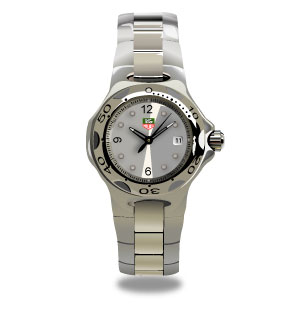
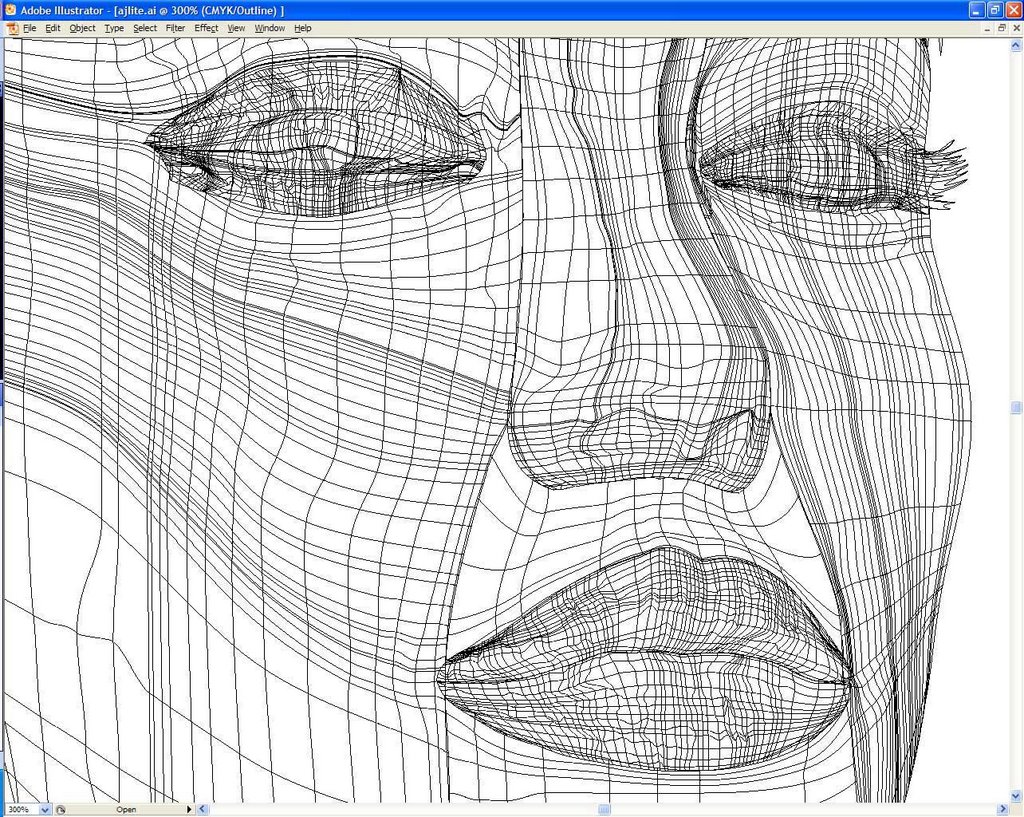
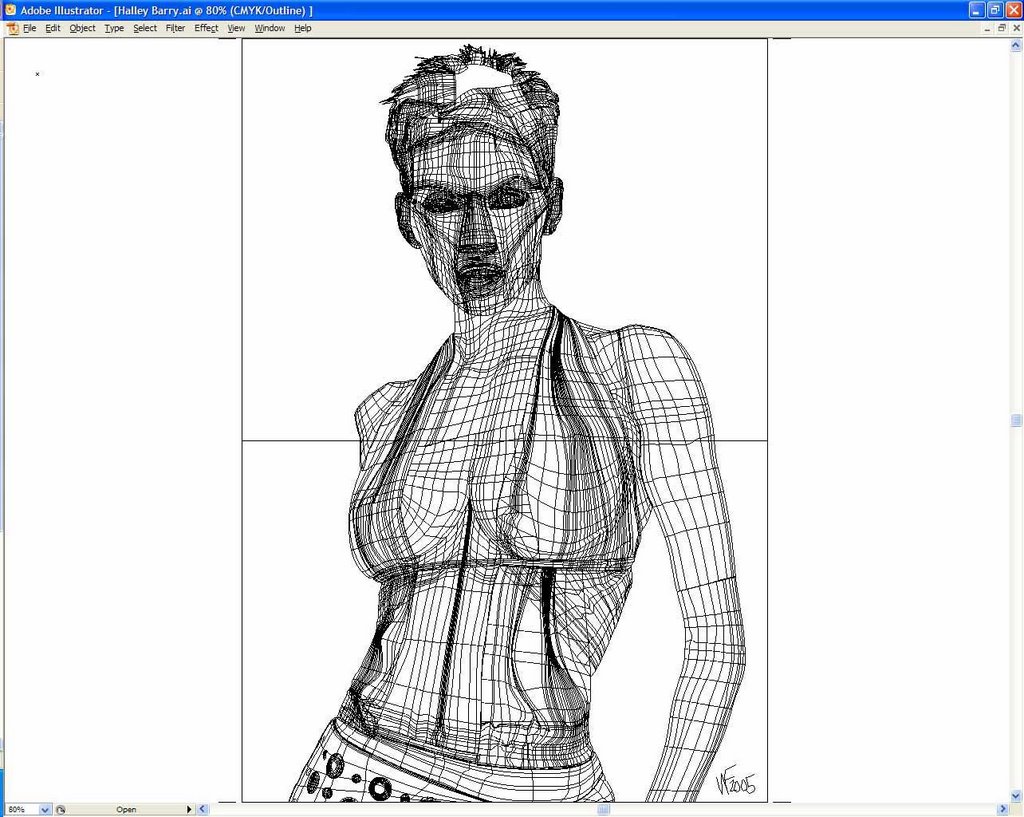
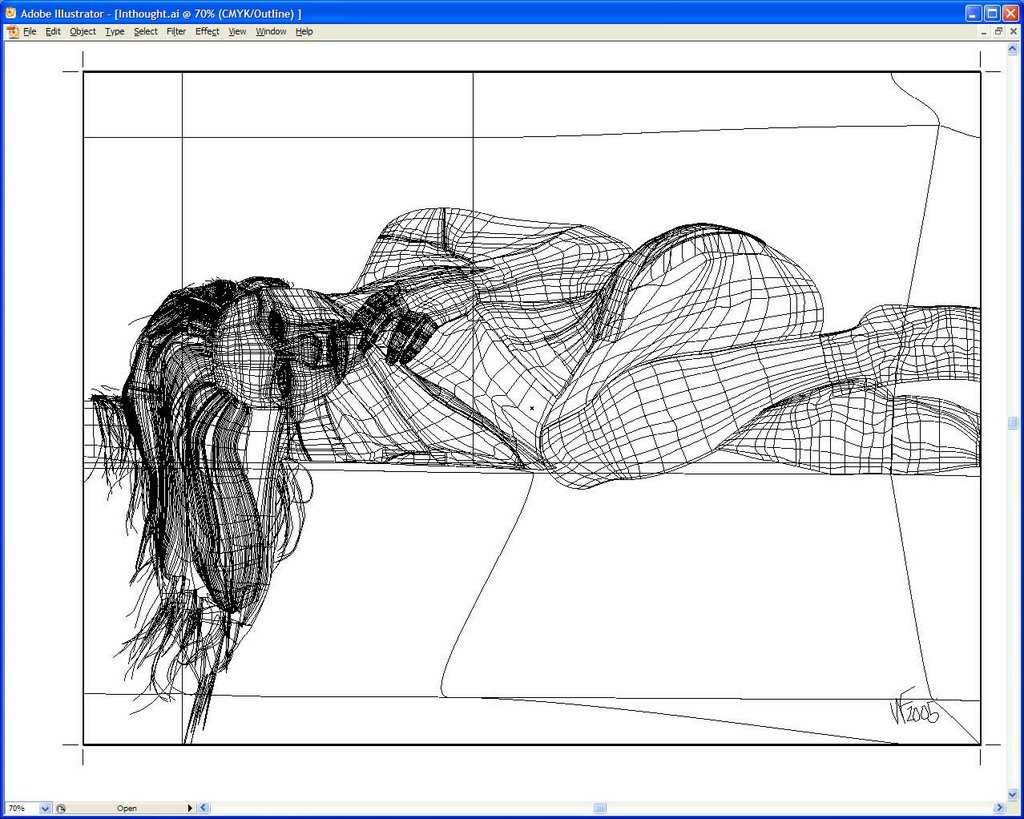
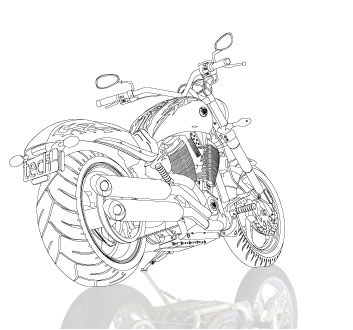
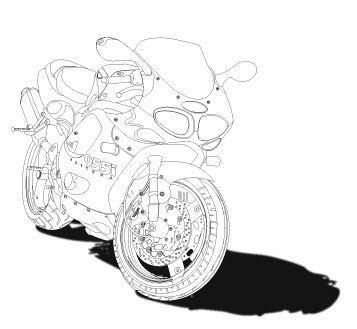
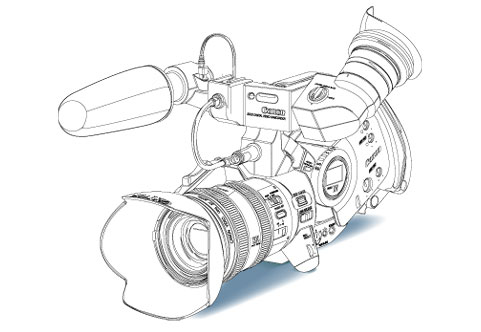
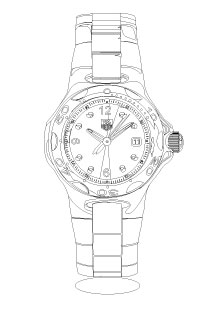
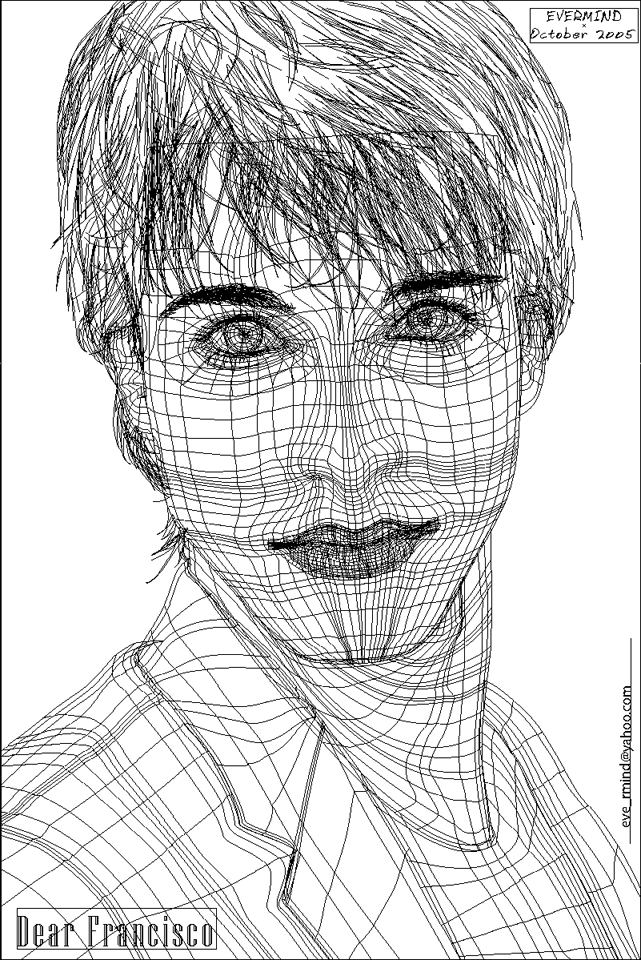
If I didn't know it already, I wouldn't discern that the gallery below is made up of drawings. Yes! They are NOT photographs. Vector drawings using gradient mesh to be specific. Except for Bert Monroy, all of the vector art displayed here are 100% made from Adobe Illustrator.

Whether for challenge, or for pushing the boundaries of what the Illustrator can do, or just for the sheer pleasure of creating, these brilliant artists have dazzled, wowed, and amazed me with the pyrotechnic showcasing of their technical mastery.

WAYNE FORREST

Male, Canada, Adobe Illustrator


HALIM GHODBANE

Male, Algeria, Adobe Illustrator

REGGIE GILBERT

Male, USA, Adobe Illustrator

HIGHSIDE

Male, Japan, Adobe Illustrator

KOJI MASUI

Male, Japan, Adobe Illustrator

USSA METHAWITTAYAKUL

Female, Thailand, Adobe Illustrator


YUKIO MIYAMOTO

Male, Japan, Adobe Illustrator

BERT MONROY

Male, USA, Adobe Illustrator/Photoshop


TAKASHI MORISAKI

Male, Japan, Adobe Illustrator

ANN PAIDRICK

Female, USA, Adobe Illustrator


AROUND THE WORLD