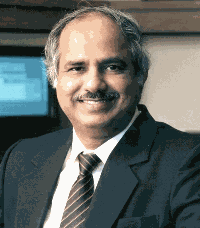
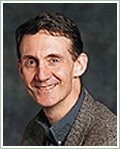
Senior Vice President, Microsoft Research
Microsoft Corporation
Presentation title
Microsoft Research: Turning ideas into reality for 15 years
Abstract
This year Microsoft Research celebrates its 15th anniversary. In this talk I will describe how Microsoft Research came into existence and the decisions, events, and factors that I believe have led to its success. I will talk about the role of basic research in industry and how it relates to both academic research and product development, and I will look forward to the future and the technologies that will shape the next 15 years.
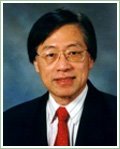
Andrew Chi-Chih YAO
Professor, Center for Advanced Study
Tsinghua University
2000 Turing Award recipient
Presentation title
A Modern Theory of Trust-but-Verify
Abstract
The development of the Internet has not only changed the world technologically, but has also given rise to novel and exciting scientific inquiries. For example, the quest of finding trust and security in a networked environment necessitates the re-examination of what reliable knowledge is, and how it can be transferred from one party to another. In this talk we will discuss a modern theory of proofs that has been developed in recent years by theoretical computer scientists. Some of the stunning insights obtained may be compared with the most intriguing ones ever found in mathematics, and they are starting to be used in applications such as the secure verification of software downloads.
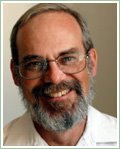 Eric GRIMSON
Department Head, Electrical Engineering and Computer Science
Bernard Gordon Professor, AI Vision Group
Massachusetts Institute of Technology
Presentation title
Computational applications in medicine
Abstract
A rapidly growing number of researchers are applying cutting-edge computer science methods, from machine learning, computer vision, computer graphics, robotics, communications, networks, and system design, to challenging problems in medicine. Examples include image-guided surgical systems, surgical robots, monitoring systems to prevent seizures or track physiological changes, systems that detect disease related differences between populations, and diagnosis systems. Because these systems are used in real medical settings, software robustness and reliability are special concerns. This talk will survey some example systems, showing the role of algorithm development and software design in these novel methods.
Jim GRAY Technical Fellow, Microsoft Research Silicon Valley
Microsoft Corporation
1998 Turing Award recipient
Presentation title
eScience - A Transformed Scientific Method
Abstract
Jim has been working for the last decade to get all scientific data and literature online and cross-indexed. Progress has been astonishing, but the real changes will happen in the next decade. First, funding agencies are forcing peer-reviewed science literature into the public domain and peer-reviewed science literature is being maintained in new ways -- cross-indexed to the data that produced it. Scientific data have traditionally been hoarded by investigators (with notable exceptions). The forced electronic publication of scientific literature and data poses some deep technical questions, including just exactly how to read and understand it? How can we preserve it so that it will be readable in a century? Incidental to this, each intellectual discipline X is building an X-informatics and computational-X branch. It is those branches in collaboration with Computer Science that are faced with solving these issues. Jim has been pursuing these questions in Geography, Astronomy, and more recently in Bioinformatics.
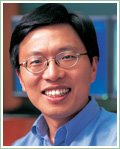
Harry SHUM
Managing Director, Microsoft Research Asia
Distinguished Engineer, Microsoft Corporation
Research 2.0
Abstract
Two important technical trends have emerged over the last decade. First, the Web continues to grow its size with a variety of new data and penetrates every aspect of our lives. Second, "software as services" has become not only a new form of software delivery, but also a way of releasing quality software. These two trends are having sweeping influence on the software ecosystem and IT industry by driving many online businesses that connect people to people and people to information. In this talk, we examine the potential impacts of "Web" and "software as services" on "research." We share our findings with the audience by suggesting six potential new directions for "Research 2.0": (1) The Web as a research platform; (2) leveraging community effects; (3) data centric computing; (4) the need of deployment driven research; (5) infrastructure is crucial; and, (6) the variation of multi-disciplinary research. To illustrate these important directions of Research 2.0, we will describe and demonstrate some recent progress made at Microsoft Research Asia in each of these areas.
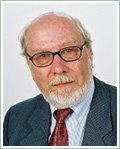
Niklaus WIRTH
Professor Emeritus, Computer Science
Swiss Federal Institute of Technology
1984 Turing Award recipient
Presentation title
A Brief History of Software Engineering
Abstract
We present a personal perspective on the Art of Programming, starting with its state around 1960 and following its development to the present. The term Software Engineering became known after a conference in 1968, when the difficulties and pitfalls of designing complex systems were frankly discussed. A search for solutions began, concentrated on better methodologies and tools. The most prominent were programming languages that reflected the procedural, modular, and finally, object-oriented styles. Software engineering is intimately tied to their emergence and improvement. Also of significance were efforts of systematizing, even automating, program documentation and testing. Ultimately, analytic verification and correctness proofs were to replace testing.More recently, the rapid growth of computing power has made it possible to apply computing to evermore complicated tasks. This trend dramatically increased the demands on software engineers. Programs and systems became complex and almost impossible to fully understand. However, the sinking cost and the abundance of computing resources inevitably reduced care for good design. Quality seemed too extravagant, and has become a loser in the race for profit. We should be concerned about the resulting deterioration in quality. Our limitations are no longer given by slow hardware, but by our own intellectual capability. Programming, after all, is NOT easy. From experience we know that most programs could be significantly improved, made more reliable, economical, comfortable to use. What can we do?
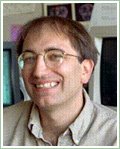
Pat HANRAHAN
Canon USA Professor, Computer Science
Stanford University
Presentation title
The Big Idea in Computer Graphics
Abstract
What is the most important idea in computer graphics? I propose it is the simple idea of a procedural representation of an image. This is in contrast to traditional physical representations of images using paints, inks, pigments, fresco, etc. Representing images procedurally allows us to create elaborate physical simulations of virtual worlds which has revolutionized movie-making.More important, it allows us to create representations of abstract concepts. Making abstract ideas concrete by making a picture is one of the joys of computing. In the future, I believe abstract image representations will be the major focus of computer graphics research and development.Finally, it allows us to use the computer to build powerful new types of graphics tools, systems and hardware, which, in this age of computer-mediated communication, have become an essential part of personal computer systems.
Ed LAZOWSKA
Bill and Melinda Gates Chair, Computer Science and Engineering
University of Washington
Presentation title
Computer Science: Past, Present, and Future
Abstract
The next 10 years of advances in computer science will be far more significant and far more interesting than the past decade. Ed will review the progress in the field, and present a number of "grand challenge" problems that computer scientists should be prepared to tackle in the decade ahead.